



Local brand ambassadors are one of the most effective tools in global marketing. They bring credibility, cultural fluency and an audience that already trusts them. The challenge isn’t finding them. It’s managing them across markets without losing what makes them effective.
Scale up too fast, and programs become inconsistent. Apply too much central control, and you lose the local authenticity that justified the investment in the first place. This article covers how to build a program that handles both.
What is a local brand ambassador?
Not every local brand ambassador is a paid influencer, and not every collaboration looks the same. Some are formal partners with ongoing briefs and a long-term relationship with the brand. Others are organic advocates or superfans who promote the brand because they genuinely like it. Both need to be nurtured, but in different ways.
Formal partners need structured onboarding, clear briefs and regular communication to stay aligned with campaign goals. Organic advocates respond better to a lighter approach. This can include early access to products, genuine engagement with your brand’s content, and the freedom to talk about the brand on their own terms.
Local influencer marketing campaigns also differ greatly from global influencer campaigns. While global campaigns are built for cross-border reach, local programs focus on building sustained, community-level presence in specific markets.
Local influencers are typically nano- or micro-influencers with between 1,000 and 100,000 followers, but their audiences are highly engaged. Their strength comes from relevance, not reach. They share the same location, interests and communication style as their audience, which makes their recommendations feel personal.
Audiences now demand something “real” over polished ads. They skip obvious sponsorships and trust genuine recommendations from creators they follow. In fact, according to research from 2025, influencers have become the top channel through which consumers discover new brands and products.
“Audiences engage more deeply with content that reflects their own communities and humor. A global-only approach can raise awareness, but local social media builds relevance, trust and an ongoing community, especially for brands that positively prioritize authentic relationships.” – Andrea Boza, Project Manager at VeraContent
The same qualities that make local creators effective, though, are exactly what makes them harder to manage at scale. Their specificity and authentic voice bring strong coordination challenges. As the brand, you need to build a strong system to support the logistics around the collaborations.
How to balance global impact with local authenticity
The core challenge in managing local brand ambassadors across markets is in balancing brand consistency with local voices. A 2026 marketing study analyzed 38 influencer campaigns across 17 brands and identified four core decisions every brand must make when designing a campaign:
- Content strategy: the types of content created and shared (reviews, tutorials, events)
- Creator portfolio: the types of influencers used (micro, expert or non-expert)
- Control level: how much control the brand has over the content creation process
- Communication tone: the tone used to send the message (logical, humorous, emotional, aspirational)
The researchers found that these four dimensions of influencer marketing strategies, which they call the “4Cs,” need to be managed as an integrated system, not in isolation. The right configuration depends on both where you are in your marketing funnel and what dimension of your brand personality you want to convey.
Once you’ve worked out that configuration, translating your global strategy into a workable one comes down to a few key principles.
Build a campaign idea that’s adaptable, not rigid
A single campaign concept doesn’t need to, and shouldn’t, produce identical content across every market. It needs to be modular enough that influencers from different countries and with different reach can work from it in ways that make sense to their audiences and on their preferred platforms.
Instead of a singular, rigid brief, offer a framework that lets creators infuse their voices and personalities into the content. For example, instead of giving a creator an exact script, give them a list of points to cover and let them figure out the best approach for their audience.
Establish clear brand guidelines
This is the infrastructure that holds a multi-market ambassador program together. A 2025 study on precision influencer marketing found that well-executed campaigns can be six times more efficient at reaching consumers than traditional influencer efforts, but only when the strategy is coherent and centrally anchored. Guidelines are what make coherence possible without uniform and uninspired execution.
“Companies maintain strong global brand consistency through clear visual identity and mission, tone-of-voice guidance, core messaging pillars and shared campaign objectives across markets. We localize those foundations in ways that feel native to each audience. That can mean adapting references, highlighting region-specific partnerships, responding to local trends or tailoring formats based on platform usage in different countries.” – Andrea Boza, Project Manager at VeraContent
Partner with the right local creators, not just the biggest
Assess factors like credibility, content engagement, brand fit and product relevance, not just follower count. A creator who genuinely uses and believes in a product will produce very different content from one who was simply the biggest name available in a market.
See also: How to find local content creators for your brand
Create feedback loops between global and local teams
Establish a global influencer marketing core that can drive transformation and provide guidance to local operational teams while allowing local teams to generate appropriate content based on their culture and local consumer insights.
When local teams have a structured way to get insights back to the operations center, the whole program gets smarter over time without losing local flavor.
Tips for managing remote teams of local brand ambassadors

Once you’ve chosen your ambassadors, the next challenge is day-to-day management. Remote teams across multiple markets need structure, support and a clear flow of information.
Start with strong onboarding. A comprehensive onboarding pack should include brand identity and information, product knowledge, campaign objectives, dos and don’ts and platform-specific guidance. It should be detailed enough to actually be useful, but flexible enough to let ambassadors interpret it through their unique lens.
Give creators room to work. Many successful influencer campaign managers let influencers take the lead because it lets them create things they truly care about or know their audience is interested in.
This is backed by the 2026 influencer marketing study, which found that influencer marketing strategies with lower brand control tend to perform better for lower-funnel outcomes because creative freedom preserves the influencer’s credibility and voice.
Invest in long-term relationships over one-off collaborations. Ambassadors who have worked with a brand over time produce more authentic content, require less briefing and are more likely to organically advocate for the brand beyond contracted posts. Long-term relationships also open the door to richer collaboration, including events, videos, interactive content and a high level of brand affinity that was built together.
Connect ambassadors across markets. Shared platforms or cross-market campaigns help build a sense of community within your ambassador network and give creators the chance to learn from each other about what performs well in different regions.
A framework for scaling your local brand ambassador program

Scaling a local ambassador program across markets requires a clear, deliberate structure. Without one, programs often fragment as they grow due to inconsistent briefing, unclear performance benchmarks and no mechanism to share findings.
A practical framework has three layers.
- The first is a centralized strategy hub. This is where brand guidelines, campaign messaging, KPIs, visual identity standards and success metrics live. Everything that defines the brand’s voice and goals sits here, so local teams don’t have to guess.
- The second is regional autonomy in execution. Local teams or project managers should have the authority to select ambassadors who truly resonate with local audiences. They should also have the flexibility to shape content that reflects that market’s cultural nuances, platform preferences and local trends.
- The third is shared reporting and feedback loops. The global strategy hub sets direction, local teams execute and reporting closes the circle. Use common tools so that performance data flows between markets, not just upward to headquarters. When a content format works or underperforms, those insights should be shared across the program.
For a practical example of what this looks like in action, VeraContent’s work with Sanicat across eight language markets shows how native community managers, given both clear brand guidelines and local autonomy, were able to identify and activate influencer collaborations that a centralized global team couldn’t have spotted as quickly. This included a Netherlands-based catfluencer partnership that drove a +480% increase in engagement.
See also: Local UGC and influencer management
Success story: How VeraContent helped OverDrive build local communities across markets
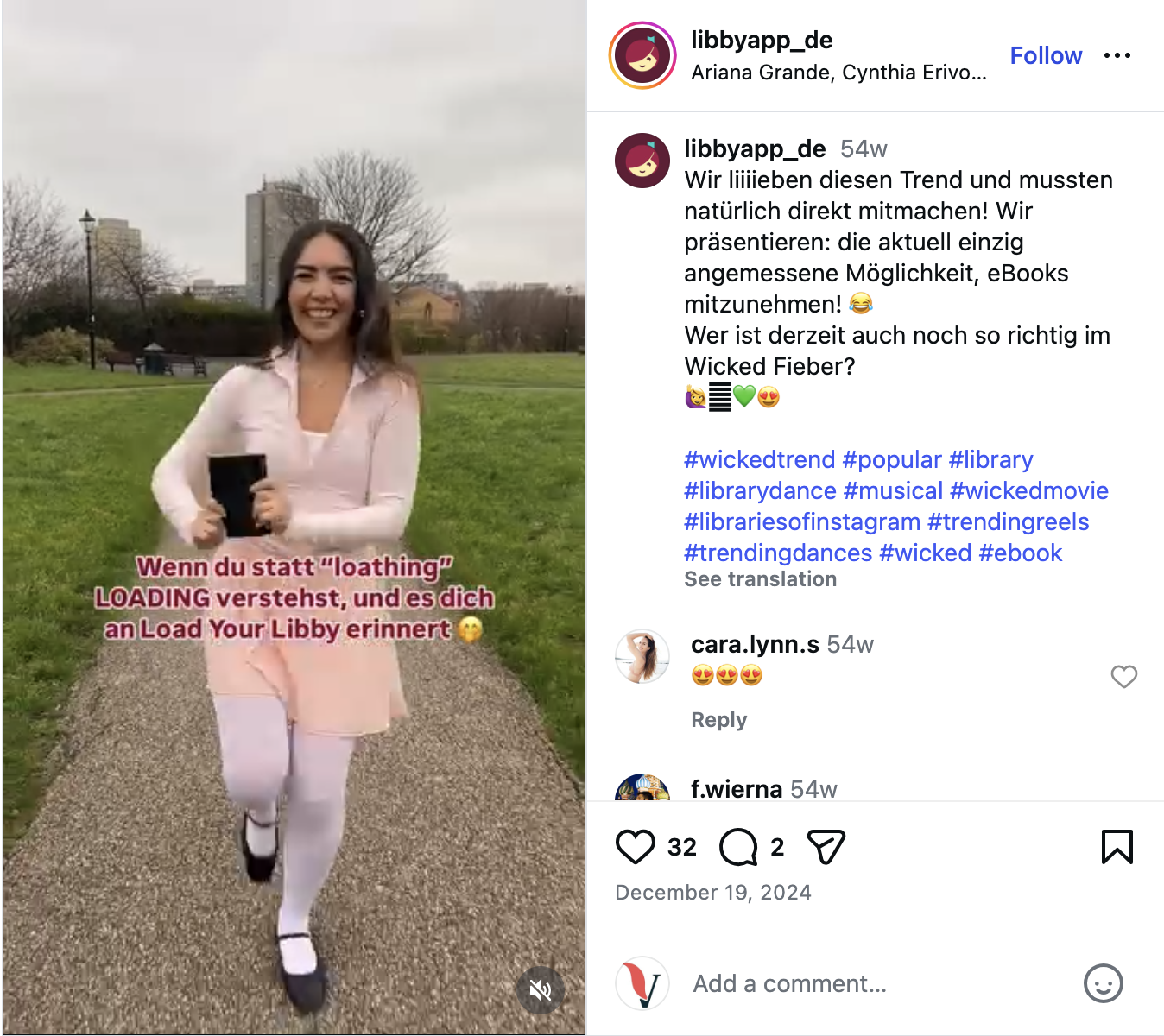
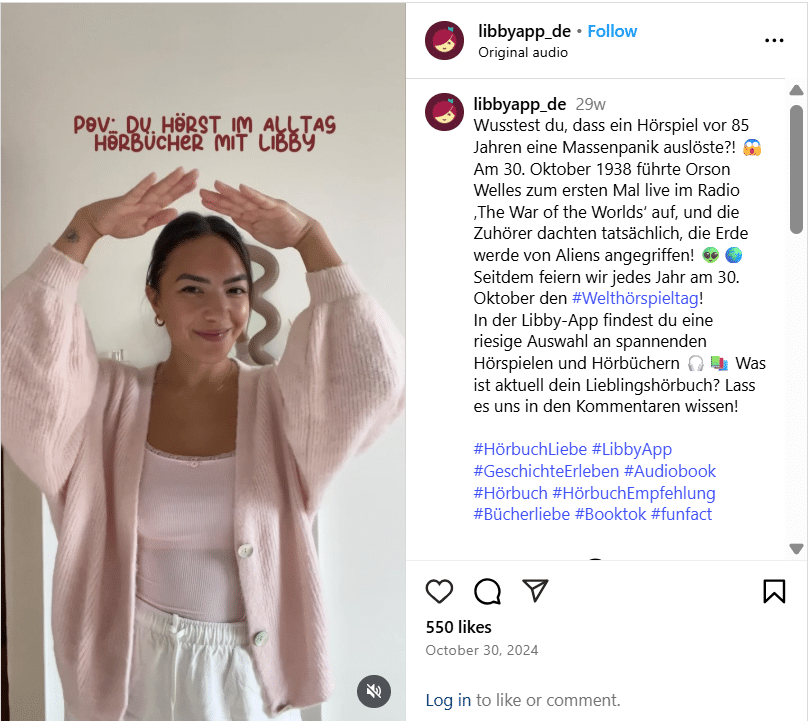
OverDrive is the world’s largest digital distributor of ebooks, audiobooks, magazines and video streaming. Two of their most popular apps are Libby, which connects library users with their local system’s digital catalog, and Sora, which gives students ages 5–18 access to high-quality, age-appropriate digital content.
Because reading habits, library systems, cultural references and platform behavior vary significantly by market, OverDrive needed more than a single international strategy.
VeraContent built a dedicated team of native-speaking Instagram community managers based in each target market: the UK, DACH (Germany, Austria and Switzerland) and Australia and New Zealand. Instead of repurposing content, each market posted original content five times a week, built around local trends, educational calendars and regional library partnerships.
The local marketing approach extended to collaborations.
“Each account has its own collaboration process to support specific campaigns. When selecting collaborators, the focus is on how well they align with OverDrive’s values, genuine engagement with reading and libraries and the ability to communicate authentically with local communities.” – Andrea Boza, Project Manager at VeraContent
Local, relevant and engaging content has greatly impacted results. In Australia and New Zealand, the Libby Instagram account grew 5x in 2024, with a single campaign driving 3,700 followers in one weekend.
Organic content reached over 153,000 users in that market alone. Engagement across the UK and DACH grew through library collaborations, giveaways and educational content tailored to each audience.
Why structured local brand ambassador programs outperform one-off creator activity

Brands that run structured, consistent ambassador programs outperform those that treat influencer marketing as a series of one-off activations. The reasons come down to trust, cultural alignment and engagement.
Local ambassadors have established credibility with their audiences. Their recommendations carry weight because they’re not constantly promoting things they don’t believe in, and their followers engage with them because of shared interests, location or values. That trust makes brand messages feel more genuine and relatable, especially when creators have a genuine relationship with a brand and the freedom to speak in their own voice.
Cultural alignment is harder to replicate with global campaigns. Local ambassadors understand the trends and nuances of their specific market, which means their content lands and feels native, not imported or generic. That local fluency is something you can’t bring from the outside.
The result is higher engagement and relevance. Content tailored to a specific community, created by someone that community already trusts, consistently drives better interaction and conversion rates than broad campaigns designed to work everywhere at once.
Global impact comes from a consistent strategy, and authenticity comes from local execution. The brands that understand this and build programs that honor both are the ones building lasting equity in the markets that matter most.
If managing creator programs across markets is slowing your team down, let’s talk about how to structure it. Book a call.
Or download our worksheet: Adapt your content strategy to local markets
