



AI can translate your content in seconds. It can also quietly undo months of brand trust.
Technology has made translation faster and cheaper than ever. But global brands are discovering a growing gap between content that’s technically correct and content that actually connects.
AI doesn’t understand cultural nuance, emotional cues or local context. When those things are missing, engagement drops, trust erodes and content starts to feel generic.
Here’s why AI can’t replace cultural adaptation in localization, what it still gets wrong and how global brands are combining AI speed with human expertise to create content that actually resonates in local markets.
Why cultural adaptation in localization matters more than ever in the AI era

Global audiences are more alert than ever to how brands communicate. When content feels automated, out of touch or culturally off, people notice immediately and they don’t hesitate to call it out.
At the same time, there’s growing fatigue with AI-generated marketing.
Since the end of 2025, brands have been incorporating elements like hand-drawn visuals, “shaky” camerawork and tactile advertising experiences to emphasize that their marketing is human-made. People are becoming more suspicious of AI content, which can quickly become a competitive disadvantage.
“It seems like the general public, unless they’re already really into AI, are against its use in marketing. When they’re out in the wild and recognize something as AI, the reaction is usually negative.”
– Naomi Bleackley, AI Marketing Specialist at VeraContent
This is where cultural adaptation becomes a business issue, not a linguistic one.
Cultural adaptation in website localization can lead to 3x higher conversion rates than non-adapted content, so localization can clearly impact your bottom line.
For thinly stretched teams, it’s easy to think that AI can be a solution: run content through an AI translation tool, check it for obvious errors, and publish. But while these tools usually handle grammar and structure well, cultural meaning remains invisible to them.
Localization goes beyond just words: human translators consider idioms, humor, holidays, symbols and even colors when adapting messages, and brands can land in hot water if they do it wrong.
This has caused problems even before the rise of AI. For example, there are many instances of brands incorrectly or poorly interpreting the Chinese New Year in their campaigns and products, alienating or even offending critical audiences. But AI translation is even more likely to create moments of cultural misunderstanding, controversies or simply content that doesn’t connect with audiences.
“It’s pretty obvious when something’s been translated with AI. It makes the customer feel like your brand isn’t investing in them, and you haven’t taken the time to understand their market or needs. Plus, it often brings trust levels completely down, particularly if it’s a brand you’re not already familiar with.”
– Naomi Bleackley, AI Marketing Specialist at VeraContent
What AI still gets wrong: The real limitations of machine translation
AI translation tools have improved quickly, but their limitations are still fundamental. For marketing content, especially, these gaps show up in ways that directly affect trust, tone and consistency.
Unpredictable output
With pre-AI translation software, if you put a particular sentence in, it would always be translated in the same way. Since most AI tools rely on prediction-based technology, you can put the same text in and get a slightly or majorly different translation every time.
For global teams managing multiple markets, this creates inconsistencies across channels and makes quality control more difficult.
Cultural blind spots
AI can interpret common idioms or expressions literally or completely miss culturally inappropriate phrases. Imagery can cause even more problems, as AI can’t assess whether visuals are culturally appropriate.
For example, the color white and thumbs-up gestures have different meanings in other markets that AI may miss completely.
See also: Emoji localization: How to adapt to global markets
Built-in language bias
Many AI models are primarily trained on US English content, meaning that there’s an inherent US English bias in output. Asking ChatGPT for British English content, for example, is typically accurate, but will often feature random words written with US English spelling.
This bias extends to other languages. AI often mirrors structures that are normal in American English but not in the target language, which can read as unnatural and strange to audiences, and make it more obvious that the content was created or translated by AI.
Many romance-language outputs on ChatGPT have English-style title capitalization, for example.
Regional variants
Many languages have strong regional variants: Brazilian and Portugal Portuguese, Canadian and France French, and all the different variations of Spanish.
Even if your team is aware of these differences, AI tools struggle with maintaining regional variant consistency. If you don’t have a human reviewing your translations, your content could have the completely wrong tone.
Struggles with longer texts
AI performs best on short passages. As text length increases, quality often drops. Early sections may be translated accurately, but later paragraphs can drift, oversimplify or even change the original meaning.
For long-form content like landing pages, campaigns or reports, this creates serious brand and messaging risks.
Examples of cultural adaptation in localization done right
The most successful global brands are so because they invest deeply in cultural adaptation and understand its impact on engagement and conversion.
Here are examples of companies that got it right:
Too Good To Go
At VeraContent, we support Too Good To Go by helping them create content that feels genuinely local in every market. Instead of adapting content from a single global source, we work with local community managers who create content for their own audiences.
That means the same language, the same accent and the same point of view. From Denmark and Norway to the Netherlands, Belgium, Portugal, Italy and Spain, this approach ensures messages land naturally and reflect how people actually speak and engage in each region.
AXA
AXA, an insurance company, entered the Nigerian market in 2014. To build up trust in an industry that often relies on reputation, AXA released a campaign on Independence Day, highlighting some of the country’s most important historical heroes.
By anchoring the brand in local history and pride, the campaign felt relevant and respectful instead of imported.
Red Bull
Red Bull is known for its sponsorship of extreme sports around the world. In Brazil, it sponsors more locally minded events like underground concerts and Carnival. It previously streamed samba parades on Red Bull TV, and this year it’s launching a limited edition Carnival flavor.
Streaming samba parades and launching a limited-edition Carnival flavor allowed Red Bull to stay recognizable while still showing strong cultural awareness.
KitKat
The brand name KitKat sounds similar to the Japanese expression “kitto katsu,” a wish for good luck historically said to students around exam season. Many Japanese KitKat campaigns focus on students and exams.
The brand famously has hundreds of Japanese flavors, including limited-edition and regional ones, highlighting Japanese consumers’ needs of variety and novelty.
Each of these examples shows the same principle: cultural adaptation works when brands invest in understanding what matters locally, rather than assuming global consistency means sameness.

The human advantage: Why cultural expertise is irreplaceable
While AI may be great for speed, volume and more technical translations, human translators and cultural experts bring irreplaceable value to localization projects.
Marketing content needs a lot of creativity to be effective.
“When it comes to marketing text, whether it’s copy or a tagline, you need more of a localization and transcreation approach to make it impactful.”
– Naomi Bleackley, AI Marketing Specialist at VeraContent
This extends from the beginning to the end of the content cycle, not just translation.
To start, local community managers can give feedback on whether a piece of content even belongs in a particular market. Their understanding of trending topics, current events and cultural sensitivities can help brands focus their resources on the most relevant content for consumers.
Native speakers understand connotations, double meanings and cultural references that AI often misses. They recognize when a phrase that seems innocent in the source language carries negative associations in the target culture and can work to create a similar phrase that carries the intended meaning without offending.
Humor is also notoriously difficult to translate. Beyond complex translations like wordplay, different places value different kinds of humor: British people appreciate sarcastic and witty writing, while Japanese consumers prefer puns. You need native speakers who deeply understand both languages and cultures for effective humor translation.
Global brands also need voice and messaging consistency, while still adapting to local contexts. Even if you have an AI translation software you’ve given brand or style guidelines to, it will still make plenty of mistakes. Human editors understand a brand’s global voice while making culturally appropriate adjustments.
Many teams now use AI for initial translation, followed by human review. This can work well for straightforward content.
But, be warned:
“For creative work, it may end up taking a translator the same amount of time as if they were translating from scratch. Plus, it can make the final translation less creative, because the translator becomes biased to what’s already been done.”
– Naomi Bleackley, AI Marketing Specialist at VeraContent
Ultimately, cultural adaptation depends on trust in people who know the market. Whether through an agency or freelance specialists, brands that invest in human expertise signal respect for their audiences and see stronger engagement as a result.
The future of localization belongs to culturally aware brands
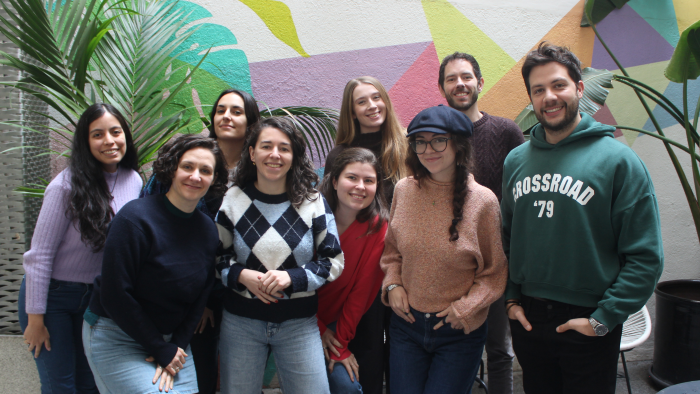
Cultural adaptation can’t be automated away. AI can support localization workflows, but it can’t judge context, nuance or what will resonate in a specific market.
The strongest global teams use AI for efficiency and rely on human expertise to make content feel relevant and intentional. That balance is what turns translation into connection.
Want to use AI as a strategic advantage, not a shortcut?
Download the AI Content Toolkit to learn how to integrate AI into your workflow while keeping cultural relevance front and center.