Every major social platform now translates your content. Meta translates and dubs Reels, YouTube auto-dubs videos in 27 languages, TikTok translates captions and dubs videos with AI and LinkedIn translates posts in the feed.
That means your content can reach new markets without new production. It also means a platform may already be translating your brand’s voice, and few marketing teams have decided which content they’re comfortable letting it handle.
This guide covers what each platform’s native tools do in practice, where they fall short and how they fit into the future of localization: AI for speed and reach, local experts for meaning, tone and trust.
How social platforms now handle localization natively
New AI tools integrated into social media platforms handle translation and dubbing (replacing the voice with translated audio), and they get more accurate and realistic every day.
This has an interesting effect for brands and content creators: their videos may suddenly be reaching a wider audience than they originally intended. They might not even realize yet that their content is being translated into other languages.
Below, we outline what the main platforms offer, how much control brands have over translations, and where human review is essential.
Meta (Instagram and Facebook): AI translations for Reels
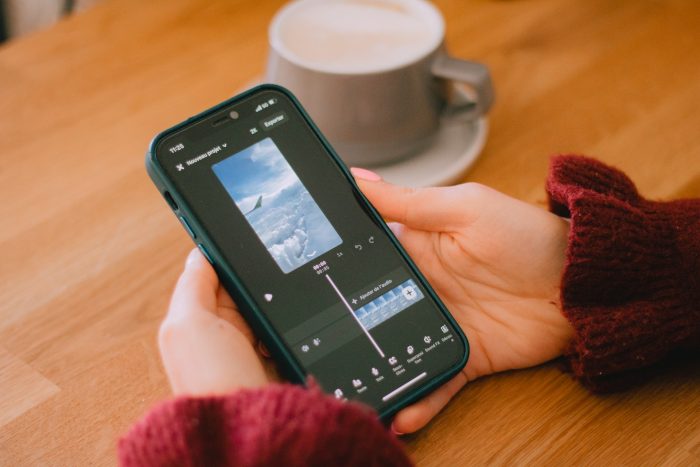
Meta AI can translate and dub Reels into other languages while keeping the original speaker’s voice, sound and tone. Creators can also turn on optional lip-syncing, which matches mouth movements to the translated audio. This means your videos can reach a much wider audience in their own language, which can help hold viewers’ attention in a highly competitive environment like Instagram Reels.
“On Instagram, the user is ready to tap or scroll and will jump to the next post within seconds. So you only have one second or less to catch their attention.”
– Joana Aina Sánchez, head of project management at VeraContent
- What it supports: On Instagram, Meta AI translations support English, Spanish, Hindi, Portuguese, Bengali, Tamil, Telugu, Marathi, Kannada, French, German, Italian, Japanese and Korean. Facebook supports English, Spanish, Hindi, Portuguese, Bengali, Tamil, Telugu, Marathi and Kannada. Meta has also announced Arabic, Bahasa Indonesia, French, Thai and Vietnamese for Facebook.
- Who can use it: All public Instagram accounts in countries where Meta AI is available, and Facebook creators with at least 1,000 followers.
- What control brands have: Translation is opt-in. Creators switch it on for each Reel and can choose to review the translation before it goes live, then approve or reject it. Rejecting a translation doesn’t affect the original Reel. Every translated Reel carries a “Translated with Meta AI” label, and viewers can switch back to the original language or turn translations off. On Facebook, Page managers can also add up to 20 of their own dubbed audio tracks to a single Reel. Meta has announced this option for Facebook only.
- Limitations: The tool works best when speakers face the camera, and lip-syncing can sometimes look unnatural. Custom audio tracks on Facebook aren’t lip-synced. The tool translates speech, so it doesn’t always translate on-screen text.
Practical takeaway: Meta’s tools are useful for extending the reach of straightforward, presenter-led videos. For campaigns where the wording, visuals or delivery carry a specific cultural meaning, switch on review and check each translation before you approve it. On Facebook, you can upload human-reviewed dubbed tracks instead of relying only on AI-generated versions.
YouTube: Auto-dubbing and multi-language audio
YouTube has rolled out auto-dubbing in 27 languages worldwide. It’s on by default for eligible creators, though some videos don’t qualify (for example, videos over 120 minutes, videos with little speech and videos with copyright claims). YouTube is also piloting lip-syncing with select channels. YouTube reported that in December 2025, more than 6 million daily viewers watched at least 10 minutes of auto-dubbed content.
- What it supports: Automatic translated audio tracks in 27 languages. Expressive Speech aims to keep more of the original speaker’s pitch, tone and energy. It launched in eight languages: English, French, German, Hindi, Indonesian, Italian, Portuguese and Spanish.
- Who can use it: Creators worldwide. Auto-dubbing is on by default for eligible channels, and the supported language pairs vary by video.
- What control brands have: Creators can preview dubs and review transcripts in YouTube Studio. They can publish, unpublish or delete individual language tracks, and the “Publish manually” setting holds dubs for review before they go live. Creators can’t edit automatic dubs, so if a dub misses the mark, the fix is to unpublish it.
- Limitations: Automatic dubbing can struggle with dialogue that relies on humor and idioms, and doesn’t always get names or brands right. Also, if the speakers have strong accents or there is a lot of background noise, the AI may not make out the words accurately.
Practical takeaway: Use auto-dubbing to test demand in new markets or expand the reach of educational and informational videos.
See also: Localization strategy: Your guide to engaging a global audience
TikTok: Auto-translated captions and AI dubbing for ads

TikTok offers several ways to make content accessible across languages. Viewers can use text and caption translation features, while TikTok for Business offers AI-powered video translation and dubbing through its Symphony Creative Studio suite.
- What it supports: Video translation and dubbing, voice cloning or stock voice selection, lip-syncing and caption editing. TikTok also offers automatically generated captions and translation features within the viewing experience.
- Who can use it: TikTok for Business marketers can use Symphony Creative Studio. Access to individual in-app translation features may vary.
- What control brands have: Teams can select target languages, review and edit generated scripts, choose voices, replace subtitles and adjust visual elements before exporting. Exported AI-generated content is labeled accordingly.
- Limitations: Translating the words does not reproduce the cultural context behind a trend, sound, joke or visual reference. Lip-syncing also has limitations, including videos with multiple speakers, covered mouths or poor lighting.
Practical takeaway: Use Symphony Creative Studio to create and test localized versions efficiently. TikTok says you can use it for both organic and paid content. However, review the creative concept itself, not just the translation. A format that resonates in one market may need a different hook, sound or style in another.
LinkedIn: In-feed post translation
LinkedIn offers machine translation for posts written in a language other than the reader’s own. Readers choose to see the translation and can switch back to the original. The brand doesn’t write, review or approve the translated version.
- What it supports: Machine translation of post text and other text-based content.
- Who can use it: Any member viewing a post in a language other than their own.
- What control brands have: Very little. Readers control translation through their content language settings, including which languages they don’t need translated. LinkedIn doesn’t give the person or brand posting a way to edit or approve translations. To control your message in a specific market, publish separate localized versions of key posts.
- Limitations: Automatic translation does not adapt industry terminology, professional tone or the cultural context of a business message. A mistranslated technical term or awkward phrasing could weaken a thought leadership post’s credibility.
Practical takeaway: On LinkedIn, where precision and professional credibility matter, in-platform translation can extend a post’s reach, but it shouldn’t replace professionally reviewed versions of important content. For priority markets, publish approved translations that reflect local terminology and professional audience expectations.
See also: Social media localization: Go global without fresh content
What the future of localization looks like at scale

A global social media strategy needs consistency, but consistency does not mean publishing identical content everywhere. The most effective approach combines one central strategy with local teams who understand how to adapt tone, references and platform norms for their markets.
Native platform features can become one layer of this workflow, helping brands distribute content more efficiently without taking local experts out of the process. The key is to decide how much localization each type of content needs.
“Automation will save you a lot of time, and it’s not that big of a financial investment. It’s worth looking at how you can incorporate some of these tools, even for those working with small-scale content production.”
– Shaheen Samavati, CEO of VeraContent
A three-tier approach to social media localization
Tier 1: Low-risk, evergreen content
- Examples: Informational videos, simple product explainers and personality-led content that doesn’t rely on wordplay or cultural references.
- Approach: Use platform auto-dubbing or translation, then have a native speaker do a quick review.
- Goal: Extend reach without creating a separate production process for every market.
Tier 2: Brand campaigns and product content
- Examples: Campaign videos, product launches, promotional posts and paid social content.
- Approach: Use AI to accelerate drafts and variations, then have local experts review the language, messaging and cultural fit. Upload custom audio tracks where platforms support them.
- Goal: Maintain brand consistency while ensuring the content is accurate, persuasive and appropriate for each market.
Tier 3: Market-specific and sensitive content
- Examples: Community replies, humor, personal stories, crisis communications and campaigns tied to local events or cultural references.
- Approach: Have local teams create or substantially adapt the content, with central oversight where needed.
- Goal: Protect trust, respond to local context and make sure the message feels relevant rather than imported.
What does a global marketing workflow look like in practice?
Too Good To Go offers a useful example of how global coordination and local execution can work together. VeraContent supports the food-waste reduction company with localized social media and community management across European markets.
The collaboration includes community management in five markets (the Netherlands, Belgium, Norway, Denmark and Sweden) and localization of marketing content in 20 languages. Local community managers publish adapted content, engage with audiences and create market-relevant Stories, while shared style guides help maintain a consistent brand voice.
As Gisela Casanovas, Too Good To Go’s global social media manager, explains, local expertise helps the brand make content more relatable in its cultural context and build trust with users. It can also help address potential issues quickly at the source, before a complaint turns into a crisis.
Global consistency works best when local teams have the knowledge and flexibility to make content relevant.
Read the Too Good To Go client story to see how this model works across markets.
Where AI helps and where it creates risk

AI tools can speed up first drafts, generate content variations and adapt existing assets for different markets. Native translation and dubbing features are useful here, particularly for low-risk content.
The risks increase when content depends on humor, cultural context or emotional responses. Haleigh Douglass, Community Manager at VeraContent, recommends that brands “be especially careful with personal storytelling, puns and wordplay, brand content and any content on sensitive topics. Those depend on tone, timing and trust and that’s where a slightly off translation can do the most damage.”
Brands also have limited control over some viewer-side translations, and translated comments can challenge community teams. Meta labels every translated Reel “Translated with Meta AI.” Some audiences may read the label as a sign that a brand hasn’t invested in their market, while others won’t notice. Test a few translated Reels in each market and watch the comments and engagement before you roll translations out widely.
Use AI where it saves time without compromising the message, with local expertise available when context matters.
“I think AI and machine translation have actually made our work more fun, as now we get to work on creative problems that only humans can solve.”
– Shaheen Samavati, CEO of VeraContent
See how we can help you build a global marketing strategy: Multilingual AI content creation
Localization wins when it connects with the person on the other end
Platform tools can extend your reach, but reach alone doesn’t build relevance or trust. A scalable strategy combines central direction, automation and local knowledge.
Start by auditing your existing social content. Decide which posts can use native translation with a quick review, which need human-reviewed localization and which require local adaptation. Then establish clear review processes and use feedback from each market to improve future content.
The future of localization uses both AI and humans where they add the most value, so your content travels further without losing meaning.
Book a call with us to audit your global social presence and build a market-by-market plan that uses platform tools with confidence and keeps your brand consistent.