


Scaling into new markets is one of the most exciting things a global brand can do. It’s also one of the fastest ways to lose control of your brand voice.
Most teams know they need translated content. What they don’t anticipate is what happens after translation: the German version sounds overly formal, the French copy feels flat and the Italian social posts could belong to any brand. Voice drift happens market by market, quietly, until it’s inconsistent everywhere.
AI tools and outsourcing have made this harder to manage. They’ve increased volume without increasing coherence. Speed without quality governance means more off-brand content, faster.
This post lays out a practical system for multilingual brand management: one core voice, many local expressions and a quality layer that keeps everything coherent.
Why multilingual brand management breaks as you scale

Most brand voice problems in multilingual content come from the same few places.
Literal translation treats your source copy as a text to decode rather than a message to communicate. The words come out correct, but the meaning and feel don’t quite work.
Mismatched formality is a common one. Many languages make formality far more explicit than English does. German, French, Spanish and Italian all have formal and informal second-person pronouns.
If your translators default to formal across the board, your brand can sound stiff in markets where warmth is the norm. If they go informal without guidance, you risk sounding inappropriate in markets where that registers as disrespectful.
Global English leaking into local markets is subtler. When your source content is written with native English idioms, jokes or cultural references, they often have no natural equivalent in other languages. Translators either drop them entirely, which flattens the copy, or attempt a literal equivalent, which falls flat or reads as strange.
Add AI to this mix and the problem compounds. AI translation and drafting tools are genuinely useful for speed and volume. But they make decisions based on patterns, not cultural judgment. They’ll produce fluent, grammatically correct copy that misses the point in the local market entirely. Without governance, AI increases the rate of consistent mistakes.
See also: Multilingual AI content training: LLMs as global style experts

Voice vs. tone: Why the distinction matters for localization
These two terms get used interchangeably in most brand guides. In multilingual content, the difference matters a great deal.
Your brand voice is the stable element. It’s your brand’s personality: the traits that stay consistent across every language, every channel and every type of content.
If your brand is warm and direct in English, it should feel the same in German. Not formally distant, not colloquially loose, but warm and direct, expressed in a way that German-speaking audiences recognize as such.
Your tone is situational. It adjusts depending on what you’re communicating and who you’re communicating with. A support email sounds different from a product launch post, even though the brand voice behind both is the same.
For localization teams, the instruction isn’t “keep everything the same.” It’s “keep the voice consistent while adapting tone to context and culture.”
That’s a meaningful and useful distinction. Without it, translators either over-adapt (and the brand drifts) or under-adapt (and the content feels foreign to local audiences).
Build a localization style guide that translators and AI can follow
A localization style guide is the most practical tool you have for keeping brand voice consistent across markets. It’s the document that tells every translator, copywriter and AI drafting tool what your brand sounds like, market by market.
A useful localization style guide covers:
Tone rules with examples
Don’t just describe the voice. Show it. Give on-brand and off-brand sentence pairs. Show how the same idea should and shouldn’t be expressed.
For example, if your brand is direct and warm, show the difference between “We’ll take care of it” (on-brand) and “Your request will be processed accordingly” (off-brand). Examples do more work than definitions.
A glossary of approved terminology
Product names, feature labels, brand-specific terms and key phrases should be documented with clear instructions: translate this, don’t translate this, always capitalize this.
For example, if your product is called “SmartFlow,” document whether that name stays in English across all markets or gets adapted. Inconsistent terminology is one of the biggest sources of brand drift in multilingual content, and it’s one of the easiest to prevent.
Cultural notes by market
This isn’t about stereotyping. It’s about flagging the decisions that can’t be automated. Is humor appropriate in this market’s content? What level of formality is expected? Are there idioms in the source content that need to be adapted rather than translated?
Document the decisions that have come up before.
See also: Cultural marketing: Going beyond simple translations
Formatting rules
Numbers, dates, currencies, punctuation styles and honorifics all vary by language and region. A price written as $1,200.00 in the US becomes 1.200,00 € in Germany. A date listed as 03/04 means March 4th in the US and 3 April in most of Europe.
These details seem small. They’re often the first thing a local audience notices when they’re wrong.
Language variants
One language doesn’t equal one market. In French, “déjeuner” refers to lunch in France but breakfast in parts of Canada. Spanish for Spain uses “vosotros” where Latin American Spanish uses “ustedes.”
A serious localization style guide treats these as distinct and documents the specific vocabulary, spelling and formality norms for each variant. The guide should be built for the people who’ll use it: writers and linguists who need specific, actionable guidance, not a brand manifesto.
See also: Which Spanish language variant is best when marketing to a global audience?
Localization quality control that catches fluent but off-brand content
A piece of content can be perfectly translated and still completely miss the mark. Fluency isn’t the same as brand fit. Quality control in multilingual content means checking for both.
A practical localization quality control review checks for:
- Accuracy. Does the content say what it’s supposed to say? Are there errors, omissions or additions that change the meaning?
- Voice fit. Does the content sound like the brand, in this language? Not just correct, but consistent with the established tone and personality.
- Terminology. Are approved terms being used consistently? Are product names and key phrases handled according to the style guide?
- Cultural fit. Are there idioms, humor, references or formality choices that don’t land in this market? Does anything read as strange, inappropriate or out of place for a local audience?
- Platform fit. Does the content work for the channel it’s on? Social copy, email, blog content and product UI have different requirements even within the same language and brand.
- Headline and CTA review. These are the highest-stakes pieces of copy on any page. Check that the intent of the headline carries across languages, and that CTAs are phrased in a way that feels natural and motivating in the local market, not just grammatically correct.
At VeraContent, we implement a two-step editorial process for every piece of content that we produce. Each piece is reviewed by a native speaker to ensure all of the above.
Multilingual brand management across social channels without losing local flavor
Social content is where multilingual brand management gets hardest. Social demands something that localization style guides can’t fully script: cultural fluency.
A social post that works in one market often doesn’t work in another because it’s built on references, idioms or humor that are specific to a time and a culture. Translating the words doesn’t transfer the feeling.
This is why local copywriting matters for social, not just local translation.
“I would advise any brand to hire local copywriters if they want to unlock the power of creative copywriting, especially in social media marketing. It’s so important to include cultural references, wordplays and idiomatic expressions that resonate locally.” — Begonia Sampietro, Spanish linguist and copywriter at VeraContent
Too Good To Go is a good example of this done well. Rather than producing one piece of social content and translating it across markets, they work with locally based, native-speaking creators in each region.
For example, their Netherlands, Norway and Denmark reels each feature a local creator showing how they personally use the app. The brand voice stays consistent. The face, the language and the cultural context are entirely local.
The brands that get multilingual social right don’t just translate their content calendar. They give local copywriters and creators the brand voice framework and then trust them to express it in a way that fits the market. The voice stays stable. The creative execution is local.
This requires clear documentation of what’s fixed and what’s flexible. Your tone rules and terminology are fixed. The specific references, phrases and hooks can and should adapt.

How to use AI without breaking your brand voice in translation
AI drafting tools belong in the multilingual content workflow. They save time on first drafts, help with repetitive content types and can be trained on glossaries to improve terminology consistency. They’re genuinely useful.
They’re also not the final step.
AI produces fluent content. It doesn’t produce culturally calibrated content. It doesn’t know when a direct headline reads as rude in one market. It doesn’t have the judgment to catch the moment a localized post stops feeling local. It can’t assess whether a cultural reference will land or confuse.
A practical hybrid workflow looks like this:
- AI draft, informed by your brand glossary and style guide
- Native-market editor reviews for voice, cultural fit and platform appropriateness
- Quality control check against your localization rubric before publication
This isn’t a workaround. It’s the right model. AI speeds up the parts that benefit from speed. Human expertise protects meaning and credibility at the points where those things are at risk.
How VeraContent keeps brand voice consistent across markets
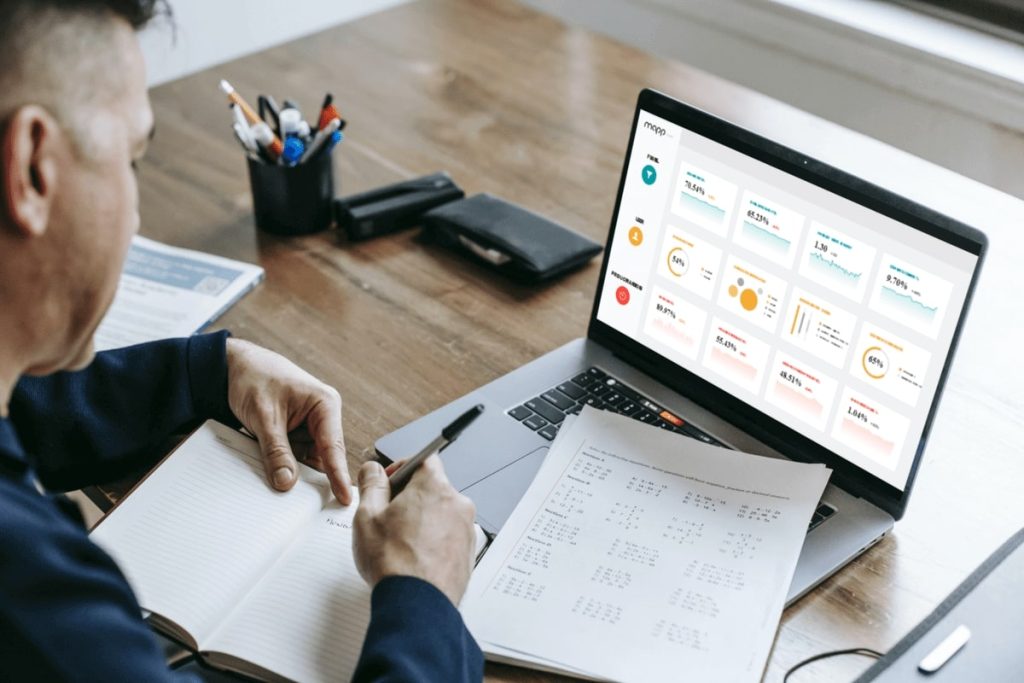
When Mapp, a leading customer intelligence and marketing analytics platform, needed to scale their multilingual content production across the UK, US, DACH, Italy, France and Spain, managing multiple freelancers across languages was creating coordination problems that were slowing them down.
VeraContent took over the end-to-end content workflow: one point of contact managing all languages, specialist writers matched to the right briefs and a localization process that kept Mapp’s brand voice intact across every market.
The results showed up quickly. Their “Retail of the Future” thought leadership campaign, produced in English, German and Italian, generated over 600 leads in three months and 15 conversions. Average time on the e-guide landing page was over a minute.
“Working with VeraContent is like having someone in-house who automatically gets it. They already know Mapp’s tone of voice and how to write for our brand, so not much is required from our side.” – Esther Lago Méndez, Partner Marketing Associate Director at Mapp
That last part matters. A well-run multilingual content operation shouldn’t demand constant oversight from your internal team. When the style guide, quality control process and editorial layer are working, your team provides the brief and trusts the output.
A system that keeps voice consistent across every market
Multilingual brand management requires building a system that gives every market what it needs to express the brand in its own way.
That system has three components:
- Documentation. A localization style guide that gives writers, translators and AI tools the guidance they need to make good decisions without asking you every time.
- Quality control. A review process that checks for accuracy, voice fit, cultural appropriateness and platform fit before content goes live.
- Local expertise. Human editors and copywriters in each market who know what good sounds like in their language and their culture.
The tools speed up drafting, the local experts preserve meaning and the quality control layer keeps everything coherent.
Your readers in Germany and Brazil are both reading your content. A robust multilingual brand management system ensures both recognize the same brand when they do.
Ready to build a multilingual brand voice system your team can actually use? Book a call with VeraContent to talk through your current setup and where the gaps are.