


Are you looking for a transcreation agency but aren’t sure how to choose the right one? If you’re doing multilingual content marketing, simply translating your copy isn’t enough. To connect with audiences across different regions, your messaging needs to reflect local culture, expectations and emotional context. That’s where professional transcreation services come in.
A transcreation agency helps global brands adapt marketing content so it feels natural, relevant and persuasive in every target market. This article walks you through what transcreation really is and the most important questions to ask when choosing a transcreation agency for your international marketing efforts.
See also: How to choose the right multilingual SEO agency to grow your business
What is a transcreation agency?

A transcreation agency uses creative translation techniques to ensure your marketing copy is expertly adapted to different languages and remains culturally relevant for each of your target audiences. By doing so, you can rest assured that your brand’s message is accurately conveyed in every market you’re trying to reach.
Transcreation is typically used for brand campaigns, advertising, social media, websites and any content where cultural nuance directly affects performance.
The best transcreation agencies will offer additional services such as project management and can help you in the entire process of content creation in multiple languages, from creating efficient workflows to putting together the right team of local professionals to adapt your brand’s messaging.
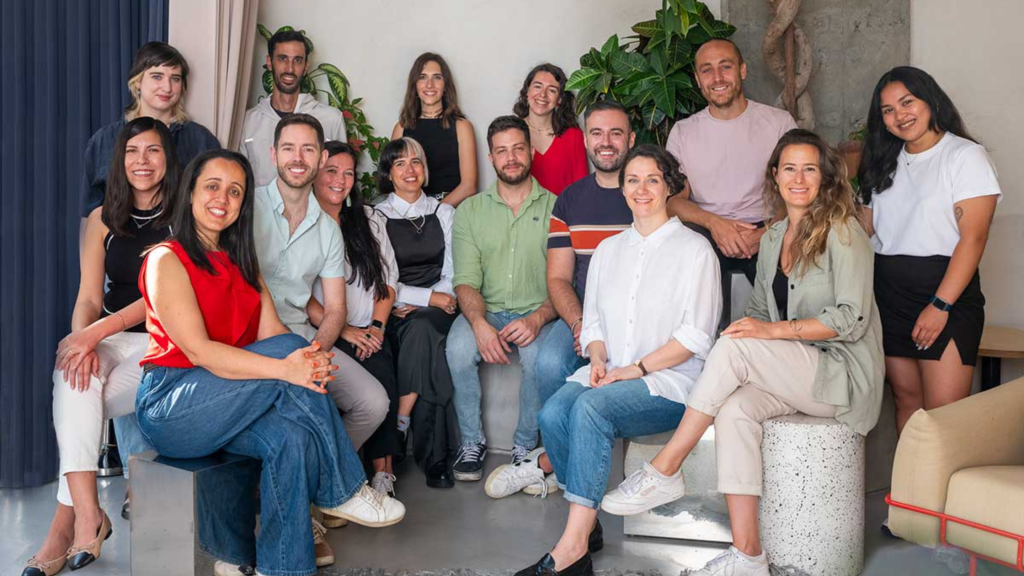
You’ll also find that many transcreation agencies have both an in-house team of translators and a wider freelance network. At VeraContent, we work with hundreds of vetted freelance linguists who are native-level speakers and based in the different regions that we work in.
The professionals in our hand-picked pool of linguists are local experts capable of capturing and adapting every nuance of your text. This local presence helps capture cultural nuance, tone and intent that generic translation often misses.
Do you want to take your brand global? Download our free guide on how to adapt your content strategy to local markets for a head start guide.

What is the difference between translation and transcreation?
Marketing content is nuanced and subtle, with cultural context weaved throughout the text and imagery. When marketing materials are translated into another language, there’s always a risk of the message losing its original intent, tone and effectiveness. This is where transcreation comes in.
While translation focuses on merely translating text, transcreation takes it a step further. It adapts the context surrounding the content—including text, colors, images and formatting.
| Translation | Transcreation |
| Focuses on accuracy | Focuses on emotional impact |
| Word-for-word | Meaning-for-meaning |
| Linguistic task | Creative and cultural task |
| Minimal adaptation | High cultural adaptation |
| Informational content | Marketing and brand content |
Transcreators recreate the original message, adapting it to your target markets by incorporating language, local culture and emotion. This is why transcreation is a much more complex and creative job than standard translation.
When localizing marketing content in certain regions or even industries, transcreation is the only option. For example, one of our podcast guests, Gastón Tourn, stressed the need for transcreation services when creating localized content around dating—which is highly culture specific—during his previous role as the chief marketing officer at dating app, Badoo.
“There’s no direct translation. It’s always transcreation. With this industry, you always have to create content almost from the start, especially in markets like EMEA where it’s complex as there are so many languages and nuances. If you want to do good marketing, you need to consider them all.”
See also: Translation vs. localization: What’s the difference, and why should you care?
Here’s one of our favorite transcreation examples
Sony Music Spain asked our team to translate well-known Argentine artist Nathy Peluso’s single, Emergencia, into English and create the English subtitles for the music video—released for the launch of Playstation’s “Horizon Forbidden West” video game.
This project was the perfect example of pulling out all creative translation skills and techniques. We needed to accurately capture the meaning and nuances of the lyrics, as well as the artist’s personality and voice.
One particular line that we’re extremely proud of is the translation of “He perdido mis anillos en el batalleo” to “I got my hands dirty in the daily grind.”
The original lyric refers to the expression “caerse los anillos,” which essentially means doing the dirty work to get the job done. But, it also implies that the “dirty work” you’re doing is below your “rank,” and thus, your “rings have fallen off.”
We were happy to maintain some visual reference to hands since the original line conjures images of regal rings falling off someone’s fingers.
Read our client story on Sony Music Spain for details on how we translated Nathy Peluso’s Emergencia.
Questions to ask when choosing a transcreation agency

Choosing the right transcreation agency has a direct impact on how your brand is perceived in each market. Use the questions below as a practical evaluation framework.
Also check out our frequently asked questions page about working with VeraContent.
1. Does the transcreation agency work in the language and region you’re targeting?
Not all agencies work with all languages. And even if they do work with a language like Spanish, for example, that doesn’t necessarily mean that they understand all target markets that speak Spanish. Spanish for Spain is very different from Spanish for Argentina, Mexico or Colombia.
Because transcreation goes beyond textbook translation, it’s essential to work with an agency already familiar with the language and region you’re targeting. Or, if not directly experienced in the region, they at least work with locals within each country.
See also: Content marketing in Spain vs. the US: 9 key differences
2. Does the agency work with native speakers based in-country?
Local insight is one of the biggest drivers of successful transcreation. Agencies that work with in-country linguists can provide real, current cultural context rather than assumptions.
Ask how the agency selects, vets and manages its linguists, and whether they live in the markets you’re targeting.
“You need to really connect with the locals in the market you’re trying to reach—whether they’re your colleagues, customers or people in your network—to make sure that the strategy you’re creating applies to their reality. Otherwise, what you’re doing is not useful at all and won’t work.” – Mário Costa, Marketing and Events Director at MANZ
See also: Marketing translators: Ultimate hiring manager’s guide
3. Does the agency have experience in your industry?
While not always essential, industry experience becomes critical in regulated or technical fields such as healthcare, legal or finance. In these cases, transcreation must align with both cultural expectations and local regulations.
For example, if you’re translating marketing content for a medical brand, you’ll want to work with an agency that is well versed in the accurate medical terms and marketing regulations in each region that you’re targeting.

4. What services does the agency offer beyond transcreation?
Hiring an agency that can offer you a full package will make your life a whole lot easier. If the agency can help you with more aspects of your global marketing strategy, that means less points of contact to deal with and more continuity.
Additional services may include:
- Localization strategy
- Social media localization
- SEO localization
- International audience research
- Graphic design
For example, if you’re looking to localize your social media, it helps to hire an agency that will work on the entire workflow—from content planning to transcreation, multilingual graphic design, scheduling and local community management (shameless plug: we do this all at VeraContent).
See also: Multilingual blog strategy: 5 tips to reach new markets effectively
5. How does the agency handle processes and delivery?
Before committing, understand how the agency works day to day. Clear processes reduce friction and improve long-term collaboration.
Key questions to ask:
- Who will be your point of contact? Will it be a Project Manager, or will you work directly with the translators?
- How will you communicate with your point of contact? Will you have regular calls?
- What project management and workflow programs does the agency use, and how will they deliver your content?
- If you have urgent requests, do they have capacity to take them on? If so, does this come at an additional cost?
- Apart from urgent requests, what is their average turnaround time for projects like yours?
- Are they able to adapt to inconsistent volumes of work/ different needs?
- What time zone are they working in and does this overlap with your working hours?
- How do they handle confidential information?
- What is their quality assurance process?
- Will they start a dedicated translation memory and terminology list for your project?
A great relationship with your agency stems from collaboration and open communication. So, make sure to get an efficient workflow—that works for everyone—established right from the beginning!
See also: Top 7 localization tools to optimize all your digital content
6. How does the agency charge for transcreation services?
Most transcreation agencies will charge per project depending on language, complexity, urgency and project type. However, others may charge per hour or per word. Because transcreation is creative work, per-word pricing is less common.
Don’t forget to ask about whether the rates include revisions and requests for changes. For example, rates often include up to two rounds of revisions; additional hourly fees may be applicable after that.
Once you get a clear understanding of how and what the transcreation agency charges, you’ll have a good idea of whether what you’re looking for is within your budget.
Remember: Some languages may have higher rates than others.
7. Can the agency provide social proof?
Always ask for case studies and examples of the agency’s work—particularly in the language, region, and industry you’re in. Case studies and work samples are the best way to know whether or not the agency can do what you’re looking for.
Another shameless plug: Check out our client stories and work samples!
The bottom line
If translation answers “what does this say?”, transcreation answers “how should this feel in this market?”
As AI-generated summaries increasingly sit between brands and audiences, culturally accurate messaging matters before users ever click. Choosing the right transcreation agency ensures your brand remains clear, relevant, and persuasive across every market you enter.
At VeraContent, we specialize in transcreation for social media, blogs, websites and visual content. If you’re ready to scale your global content creation without losing local relevance, get in touch with our team to see if you qualify for a Free Content Consultation.
Frequently asked questions about transcreation
What types of content require transcreation?
Transcreation is best suited for marketing content such as campaigns, websites, social media, slogans and brand messaging.
Is transcreation more expensive than translation?
Yes, because it involves creative and strategic work. However, it often delivers higher ROI for marketing content.
Can AI replace transcreation?
AI can support workflows, but it cannot replicate cultural insight, emotional nuance or local market intuition.
How do you measure transcreation success?
Success is measured through engagement, conversions, brand perception and local market performance rather than linguistic accuracy alone.