


Most B2B brands are posting on LinkedIn and getting very little back. A like here, a handful of impressions there, the occasional comment from a colleague. The platform feels like it should work; the audience is professional, the intent is high, but for so many brand accounts, it doesn’t.
The content earning real engagement now looks nothing like the polished company updates that dominated the platform a few years ago. Bold opinions, personal storytelling and formats that reward interaction are what’s working. Brand-first content posted from a company page, largely isn’t.
Here are the top 5 LinkedIn content trends in 2026, and what they mean for global marketing teams trying to get more from the platform.
The LinkedIn landscape for global marketers in 2026

With over 1.3 billion members worldwide, LinkedIn has evolved into a platform where authenticity and specificity outperform broad messaging. The brands and individuals winning on LinkedIn right now are posting with more purpose.
Metricool’s 2026 LinkedIn Study, which analyzed over 673,000 posts, backs this up. Engagement rates actually rose between 2025 and 2026, even as average posting frequency dropped. The takeaway: quality and relevance matter more than volume.
Here’s what the data says is working right now.
Trend #1: Step away from pure B2B marketing
LinkedIn is getting more personal. From behind-the-scenes moments and individual milestones to honest reflections on industry challenges, human-centred content consistently outperforms polished brand messaging.
The data makes a clear case for this. Personal profiles generate a 2.60% engagement rate compared to 1.60% for company pages, and they also tend to drive more comments and conversation. Company pages do better for reach and shares, which means the two serve different purposes rather than competing with each other.
The practical implication: personal profiles are where conversations start; company pages are where messages get amplified. If your LinkedIn strategy relies too heavily on your brand page alone, you’re missing where most of the engagement actually happens.
At VeraContent, we’ve seen this play out in practice. Posts from our CEO’s personal profile that share a real observation or an honest take consistently outperform equivalent content on our company page. They start conversations. The company page amplifies them.
Tips for putting this into practice:
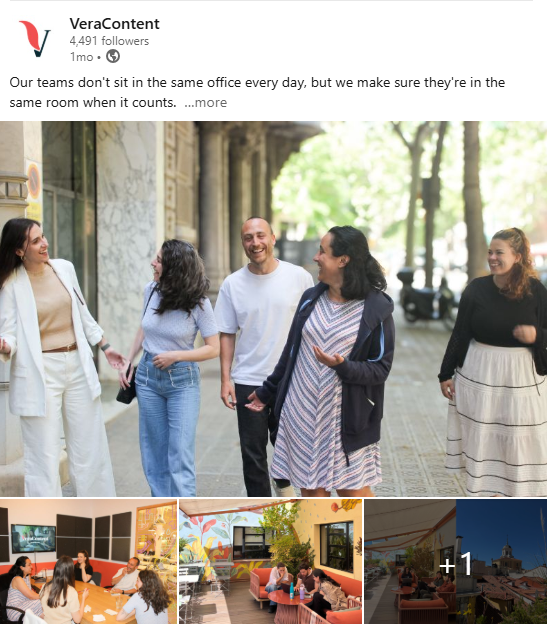
- Incorporate more team-focused posts among your B2B posts to add a more human element to your company page
- If you’re posting a link from a personal profile, make sure the post works on its own first. The link should add to the value, not be the whole point
- Encourage senior team members to post from their personal profiles, not just share from the company page
- Save external links for company page content where they’re expected and well-received
Trend #2: Get really bold to reach global audiences
LinkedIn’s global reach makes it a powerful tool for connecting with diverse audiences worldwide. But with so many people fighting for visibility on the platform, getting your voice heard means you need to be bold, honest, relatable—and say something that matters.
For example, we all know that LinkedIn is one of the best platforms for attracting new talent. But maybe it’s time to try a different approach to your standard “We’re Hiring!” post.
Check out Steven Bartlett’s approach in this LinkedIn post that’s not only bold, but extremely engaging and effective.
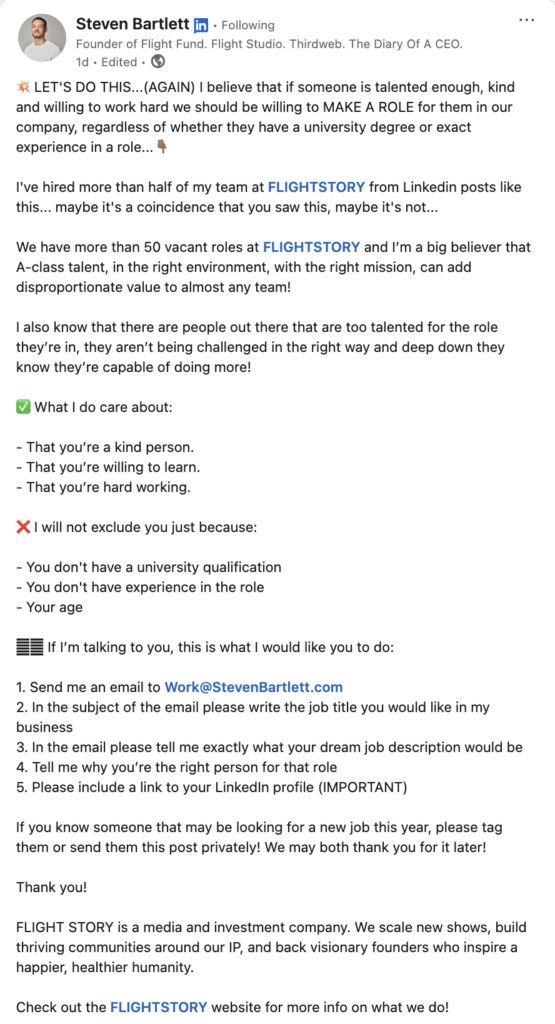
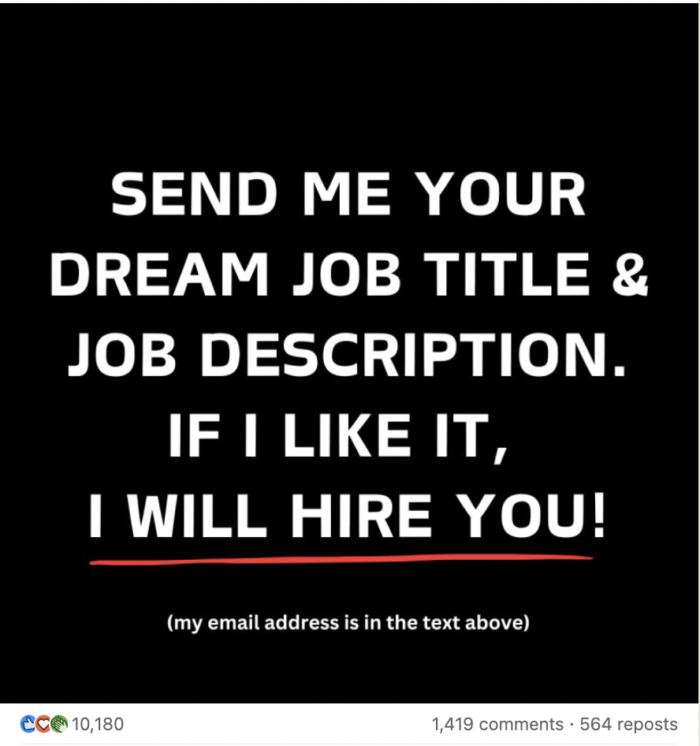
Steven explains exactly the kind of profile he’s looking for in a personal tone, mentioning human traits and values such as kindness, and also the fact that you don’t even need a university degree or previous experience to apply. His post is extremely eye-catching and inclusive, combining a lot of the top LinkedIn content trends mentioned in this article.
Bold content also invites more engagement. Metricool’s research found that posts including a direct question generate around 77% more comments than average posts. Posts with an explicit call to action to comment drive even higher participation. Giving people something to respond to, a genuine question, an honest admission, a specific take they might push back on, removes the friction of deciding whether to engage.
Tips for putting this into practice:
- State your position clearly rather than hedging. If you think something is wrong, say so
- End posts with a specific question, not a generic “what do you think?”
- Use questions to invite genuine disagreement or additional perspective, not just validation
Trend #3: Share personal stories and thought leadership content
Personal storytelling is one of the most effective formats on LinkedIn right now. Sharing real experiences, honest reflections and the lessons learned from challenges consistently builds more credibility than expert-sounding commentary alone.
This works for two reasons. First, it’s harder to replicate. Anyone can share an opinion, but a specific story from your own experience is uniquely yours. Second, it gives people something to connect with rather than just react to.
The most effective version of this combines personal experience with a practical takeaway. Not just “here’s what happened to me” but “here’s what it means for how I work now.”

In Matt’s post above, he blends humor, lightheartedness and storytelling to deliver a deeper message about social media strategy, while opening up a conversation about AI. Matt captures attention while subtly reminding readers to prioritize genuine engagement over rigid tactics.
This kind of content resonates because it feels personal and human, qualities that foster community and spark meaningful interactions.
One practical application for global marketing teams: encourage team members across different markets to share their own experiences. The person managing content in Brazil and the person managing it in Germany will have different stories to tell. That variety reflects the reality of international marketing better than any single brand voice can.
Tips for putting this into practice:
- Connect the story to something the reader can use or apply
- Start with a specific moment or situation, not a generalization
- Include the uncomfortable parts, the moment of uncertainty or the mistake made, rather than just the lesson
See also: Global Social Media Reporting: Essential KPIs You Should Be Tracking.
Trend #4: Post with purpose, not just frequency
One of the clearest findings from Metricool’s 2026 LinkedIn Study is that posting more doesn’t mean performing better. Average posting frequency actually dropped over the past year, yet engagement rates went up. The posts doing the most work are the ones earning clicks, and LinkedIn counts those clicks in your engagement metrics, even when people don’t like or comment.
Swiping through a carousel, clicking “see more” on a long post, tapping through to a linked resource, all of these register as engagement. Which means the question to ask before posting isn’t “is this timely enough?” but “is there a reason for someone to interact with this?”
Timing still matters, though. Metricool’s data shows that a large portion of a post’s performance is decided within the first 48 hours. If you post at a time when your audience isn’t active, you lose that early momentum and it’s hard to recover. For a B2B European audience, mid-morning on Tuesday, Wednesday or Thursday tends to perform well, though it’s worth validating against your own analytics.
The broader point is that a well-considered post published at the right time will consistently outperform a frequent posting cadence built around low-effort content.
Tips for putting this into practice:
- Check your analytics for the times your specific audience is most active, and treat posting time as a deliberate decision
- Choose formats that naturally earn clicks: carousels, polls and posts that reward reading to the end
- Don’t post just to stay active. Post when you have something worth saying
Trend #5: Post vertical videos (and mix up your formats)
Vertical video remains one of the strongest formats on LinkedIn. It’s mobile-friendly, it fits the way people scroll, and the LinkedIn algorithm continues to favor it for reach.
According to recent LinkedIn statistics, video content on LinkedIn generates 5x more engagement than static posts. At VeraContent, vertical video campaigns have become a big part of our LinkedIn strategy.
“The biggest growth for most has been in video content in terms of reaching impressions. A lot of their activity on LinkedIn has been geared toward video content. Looking ahead, I believe we can expect much more video content, as people are still figuring out what type of content resonates with that audience.” – Matt Navarra, social media consultant
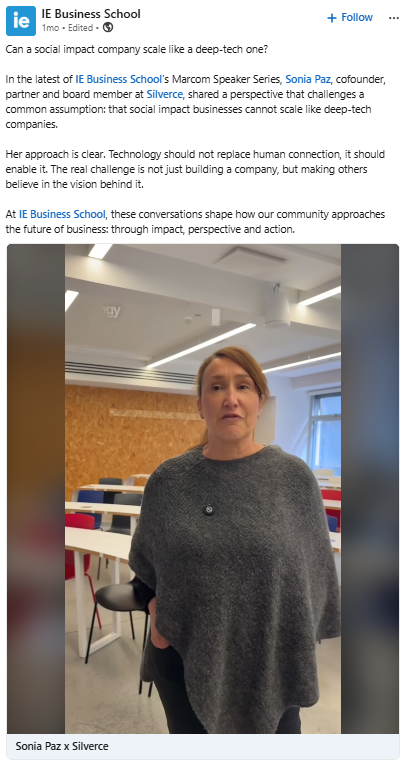
Here’s an example of a post with a vertical video that we did for IE Business School:
That said, the data from Metricool’s 2026 study is worth paying attention to: video and single images currently make up nearly 75% of all content on the platform, but they’re often outperformed by formats that people post far less often. Multi-image posts achieve more than double the engagement rate of standard video. Carousels generate significantly more reach than video on average.
The practical implication is that format diversity matters. If your LinkedIn content is mostly video and single images, you’re likely leaving engagement on the table. Carousels work particularly well for breaking down a complex idea step by step. Multi-image posts perform well for storytelling with visual variety. Polls drive high participation when the topic genuinely divides opinion.
A strong LinkedIn strategy uses a mix, video for reach and brand familiarity, carousels for depth and engagement, single images for quick moments, and the occasional poll when you want to spark a real conversation.
Tips for putting this into practice:
- Keep vertical videos short and lead with the most compelling point in the first few seconds
- Add subtitles so content works without sound
- Audit your recent posts: if you’re posting mostly one format, introduce another and track the difference
- Use carousels when you have an idea that works best as a sequence
See also: How to use LinkedIn vertical videos in your global strategy
How these trends should shape your global strategy
The common thread running through all five trends is specificity. The content performing best on LinkedIn right now is specific about who is posting it, what they actually think and what the reader gets from it.
For global marketing managers, that creates both a challenge and an opportunity. The challenge is that generic content produced at scale rarely meets that bar. The opportunity is that your team’s real experience across multiple markets, the specific situations you’ve navigated, and the lessons learned from working across cultures and languages are exactly the kind of material that performs well.
That’s not something a brand page alone can deliver. It comes from the people doing the work. If you need help with building a solid B2B LinkedIn strategy, book a call with our team.